


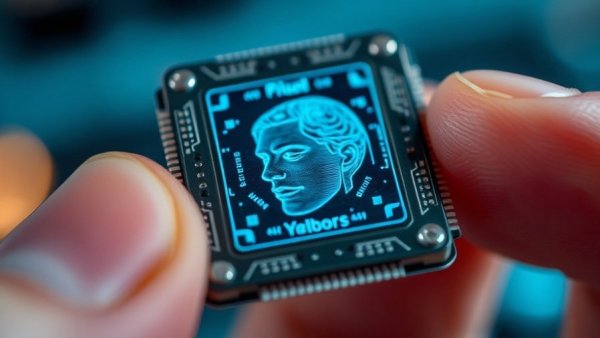
Unraveling the Mystery of Your Digital Twin
In the provocative video Companies Are Building a Second You (Seriously), a complex web of synthetic users emerges, raising essential questions for business owners in today’s digital landscape. Businesses are increasingly turning to artificial intelligence (AI) to model customer behavior with astonishing accuracy, but the implications of these digital twins could stretch far beyond mere marketing insights.
In Companies Are Building a Second You (Seriously), the discussion dives into the concept of digital twins, providing compelling insights that sparked deeper analysis on our end.
What Exactly Are Digital Twins?
Digital twins represent a significant evolution in understanding consumer behavior. They are AI-generated avatars that simulate customers based on vast amounts of personal data—everything from purchasing history to online behavior. These models conduct emotional simulations, which allow companies to predict how real customers might react to specific marketing strategies, potentially before any real-world test occurs. This process, while innovative, eliminates the necessity for traditional survey methods and focus groups that involve actual human interaction.
The Ethical Conundrum of Synthetic Users
The notion of a synthetic consumer raises ethical concerns. If businesses can accurately predict behavior through models trained on past data, where does that leave personal privacy? Many may feel uneasy knowing that their online interactions could be analyzed and distilled into a synthetic persona that speaks for them—sometimes even before they have had a chance to consent to this representation. A critical challenge for business owners is balancing the benefits of advanced analytics with ensuring that ethical practices are upheld within marketing strategies.
The Power and Limitations of AI Models
While digital twins can speak convincingly on behalf of their human counterparts, they can also misinterpret nuance and complexity inherent in human decision-making. For business owners, this distinction is crucial. The AI can produce a model that operates around common responses, yet it can falter when faced with subjective choices or less conventional behaviors. Can these models genuinely understand the unique intricacies of individual human experiences, or are they merely regurgitating generalized data? Understanding this potential pitfall is key for any business harnessing these AI capabilities.
Predictive Marketing: A New Frontier for Businesses
Despite their shortcomings, the potential applications of synthetic users in predictive marketing are enormous. Business owners can leverage these digital twins to test campaigns, refine advertising strategies, or even select product names, all while saving time and fostering efficiency in decision-making processes. The ability to swiftly evaluate numerous marketing tactics without involving actual customers allows companies to optimize their marketing strategies in highly competitive environments. However, reliance on these models must be matched with a robust understanding of their limits and the ethical considerations associated with their use.
Balancing Innovation with Accountability
The conversation surrounding synthetic consumers is only just beginning. Companies eager to integrate advanced AI tools must navigate the choppy waters of ethical responsibility. Business owners must critically assess how they deploy models that attempt to mimic human decision-making. This shift towards synthetic twins can transform marketing; at the same time, it poses intriguing challenges around accuracy, consent, and ethical business practices.
As technology continues to advance, the need for responsible practices in employing AI-driven insights will only grow more critical. Business leaders must stay informed about these trends while ensuring that they approach the world of digital twins with consideration. Understanding both their potential and their perils can guide businesses toward more ethical and effective strategies in the future.






Write A Comment